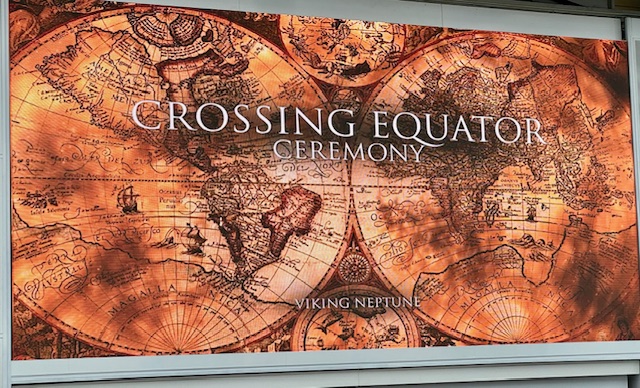
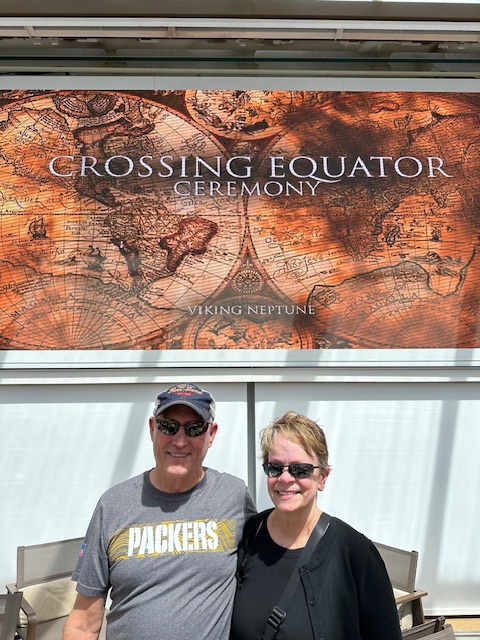
Today we crossed the Equator and moved into the southern hemisphere. It is tradition for mariners to conduct a line-crossing ceremony as an initiation rite for a person’s first crossing of the Equator. In the 18th century and earlier, the line-crossing event could be quite brutal involving hazing of the “pollywogs” (sailors who were crossing for the first time) involving beatings with boards, wet ropes and even throwing the “pollywogs” overboard.
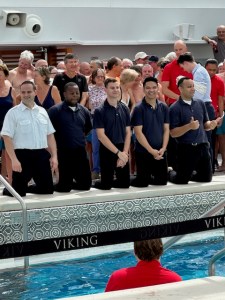
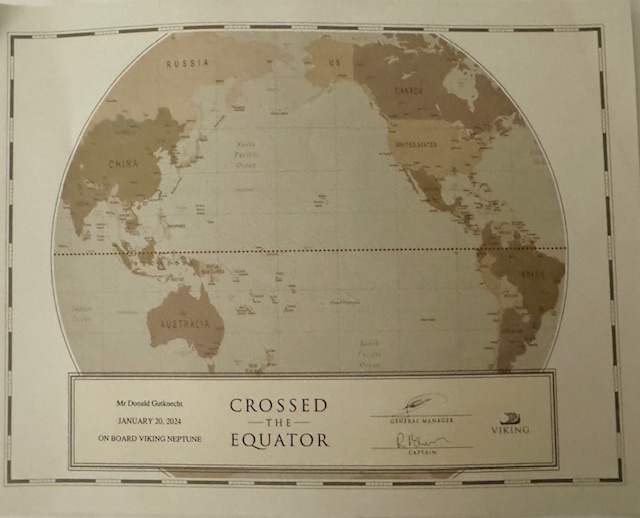
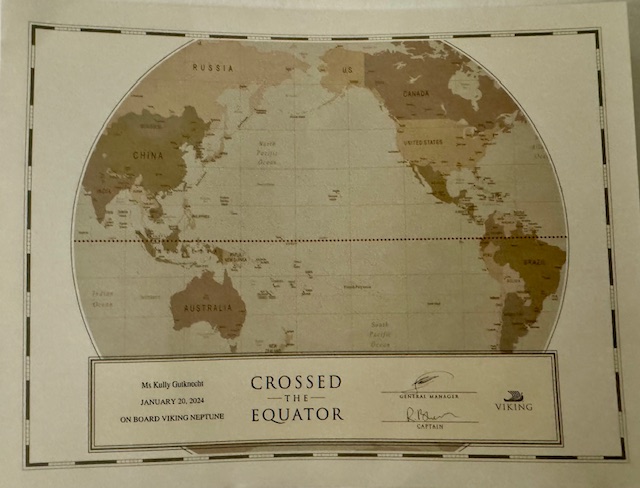
Navys around the world have their own traditions for line crossing ceremonies. The US Navy has a long “unofficial” tradition. It is a two-day event in which Trusty Shellbacks are organized into a “Court of Neptune” and induct the Slimy Pollywogs in “the mysteries of the deep. Physical hardship is tolerated, and each Pollywog is expected to endure a standard initiation rite into the order to become a Shellback. Specifics of the ceremony vary among the fleets. Many of the ceremonies involve increasingly embarrassing ordeals that range from wearing clothing inside out, crawling on hands and knees on nonskid coated decks, being swatted with short lengths of firehose, crawling through chutes or large tubs or garbage and other similar activities for the entertainment of the Shellbacks. Once the ceremony is completed the Pollywog receives a certificate declaring his new status as a Shellback.
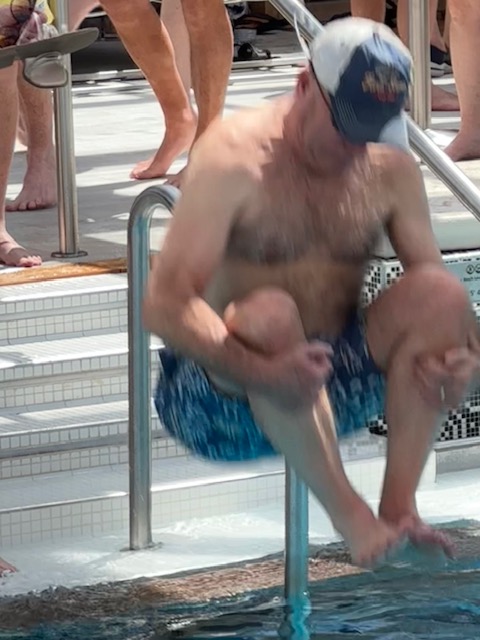
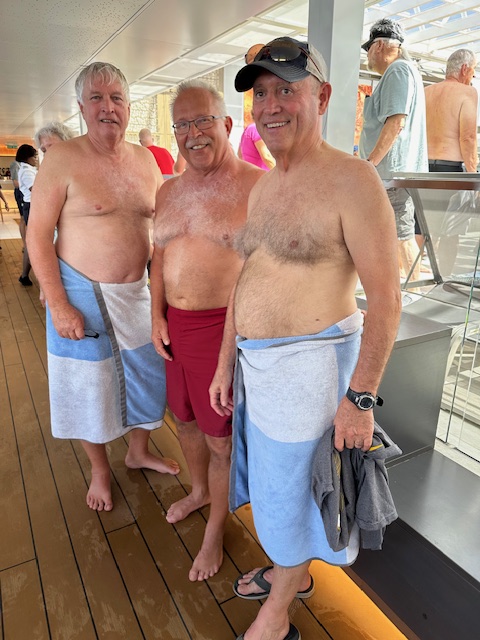
On Viking Neptune the tradition is to kiss or salute a tray of fish, dive into the pool for an equatorial baptism followed by a shot of Aquavit (A spicy Scandinavian distilled spirit). Upon completion of the crossing ceremony sailors achieve the official status of “Order of the Shellback”. First, all crew members who are crossing the Equator for the first time are initiated into the Order of Shellback followed by the passengers who are crossing for the first time by ship.
Nauti Term of the Day
To Know the Ropes – There were miles and miles of cordage in the rigging of a square-rigged ship. the only way of keeping track and knowing the function of all these lines was to know where they were located it took an experienced seaman “to know the ropes”.
“Oh the places you will go.” Dr. Seuss
 Don & Kully's World Cruise on Viking Neptune
Leave a comment