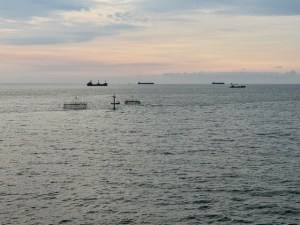
This morning, we arrived in one of the Dutch East India Company’s most important ports during the 17th and 18th centuries, Semarang, Java, Indonesia. The bustling port city was founded by the Dutch, but for centuries was the center for Hindu-Buddhist in Indonesia. However, today 90% of the population of Java are Muslim.
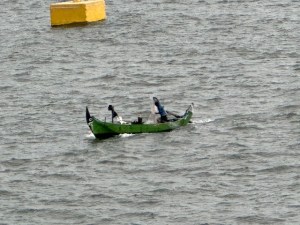
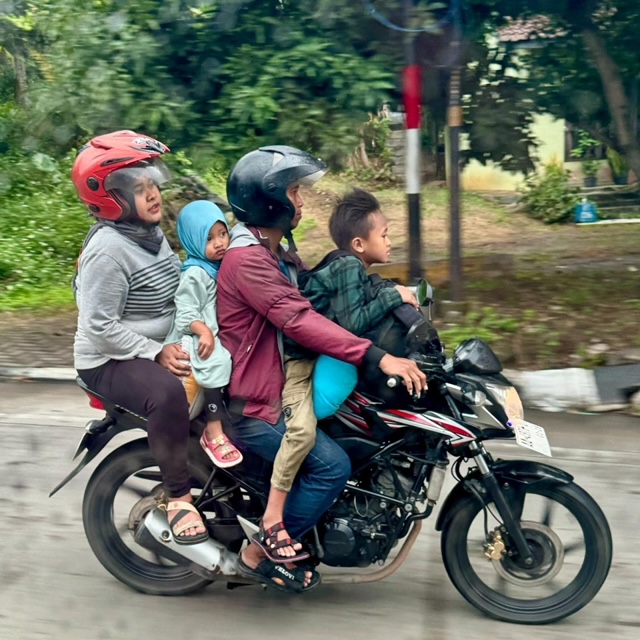
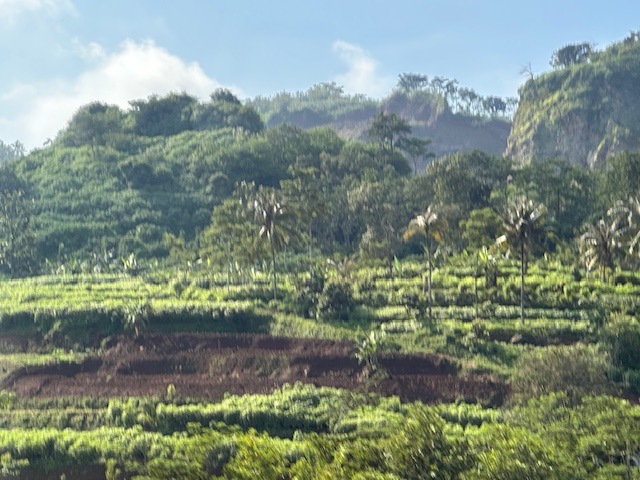
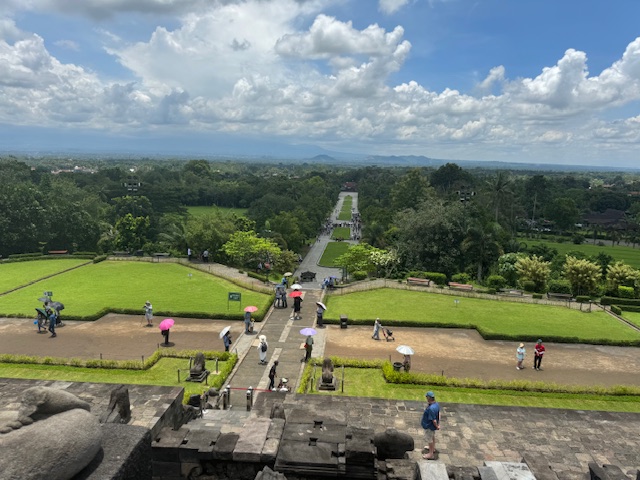
We took a Viking optional excursion to visit the Borobudur Temple, the largest Buddhist monument in the world and a UNESCO World Heritage Site. The temple is located approximately 70 miles from the port, but because of the narrow winding roads and local traffic it is a two-to-three-hour drive. So, the tour departed the ship at 7:30 AM giving us plenty of time to get to the temple. After transitioning from the industrial activities of the harbor area we drove along the out skirts of Semarang and into the Java countryside. We observed rice paddies, plush forests, coffee plantations, large stands of rubber trees and numerous small villages. At the halfway point we made a stop for coffee before heading on to the temple.

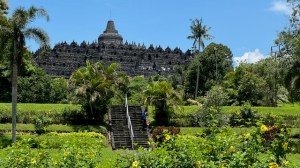
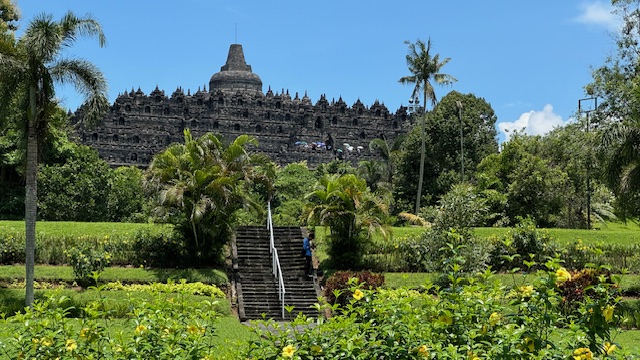
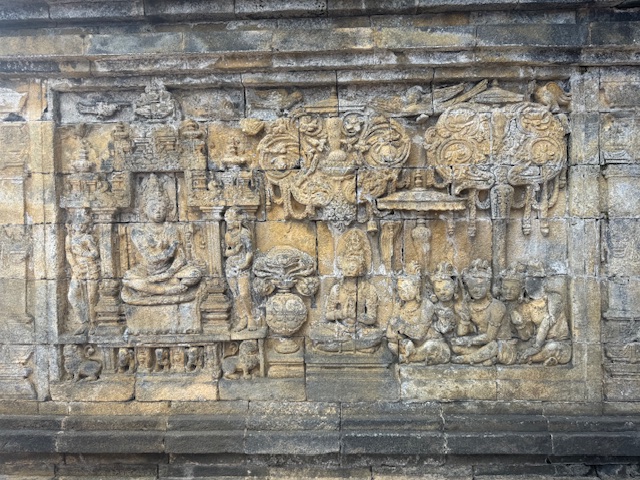
The Borobudur Temple is constructed of gray stone and consists of nine stacked platforms, six square and three circular, topped by a central dome. The temple was built during the 8th and 9th centuries taking nearly 100 years to design and build. The structure is decorated with 2,672 relief panels and originally 504 Buddha Statues. The monument guides pilgrims through an extensive system of stairways and corridors with 1,460 narrative relief panels on the outer walls. The Indonesian’s had no written language at the time the temple was built so; the panels tell numerous stories central to Buddhism. In telling those stories, the relief panels depict many scenes of life in ancient Java, from the courtly palace life, hermit in the forest, to those of commoners in the village. It also depicted temple, marketplace, various flora and fauna and also native architectures. The reliefs also include spiritual beings in Buddhism as well-as people, including kings, queens, nobleman, servants and commoners.
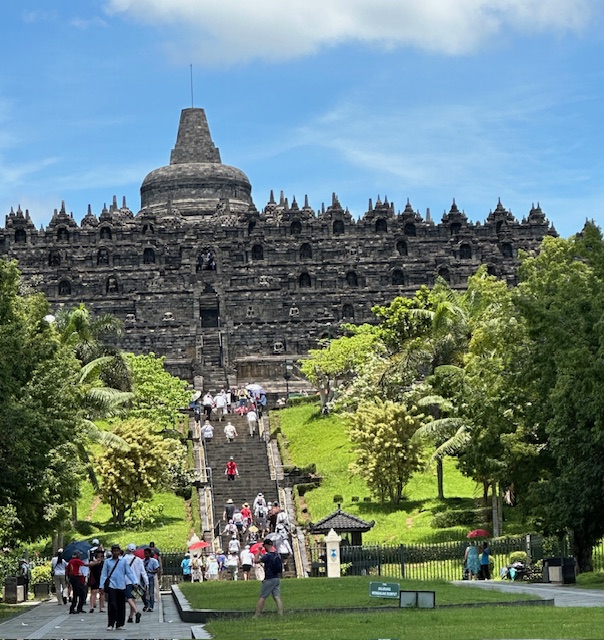
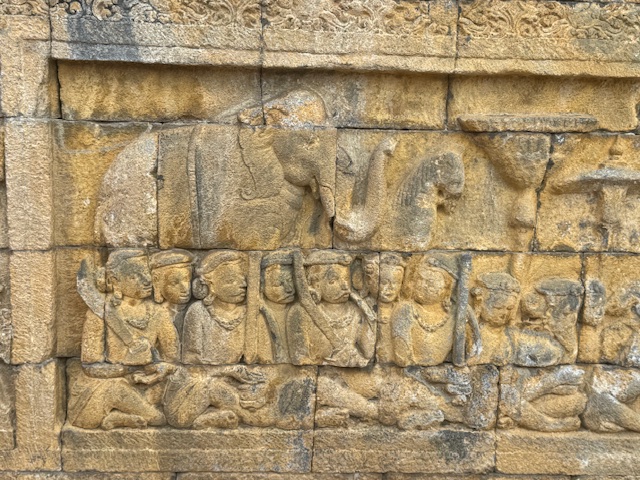
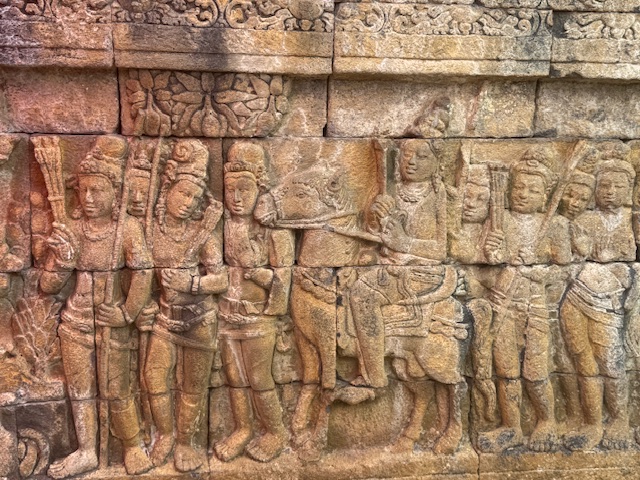
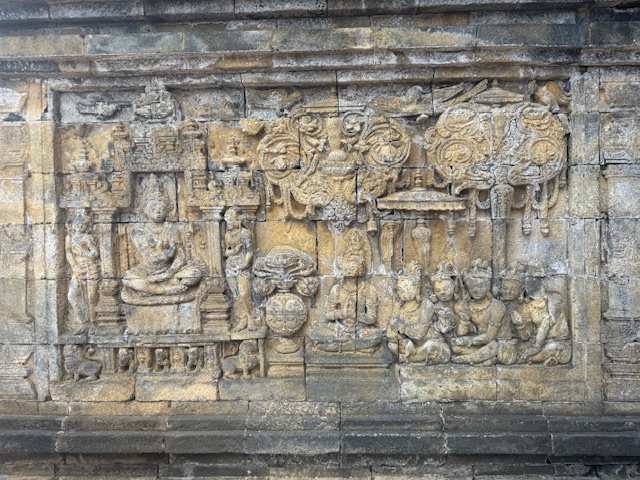
The temple was abandoned sometime in the 11th century because of a series of volcanoes impacting the area. The temple and grounds were covered with volcanic ash and overtime the area was overgrown by the jungle and was hidden for centuries. Additionally, Java converted to Islam in the 15th century reducing whatever remaining importance the temple may have had.
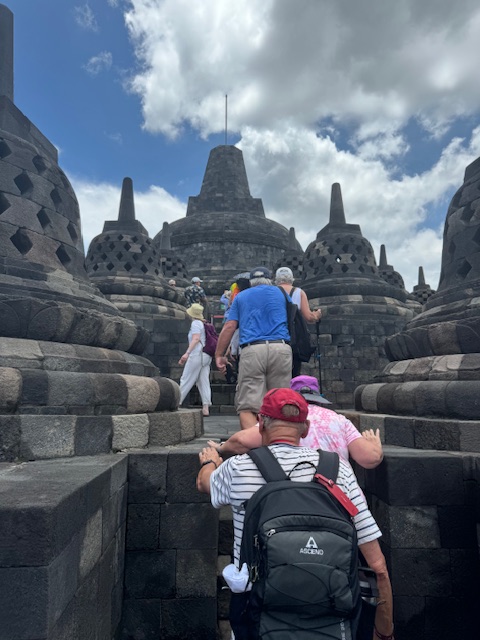
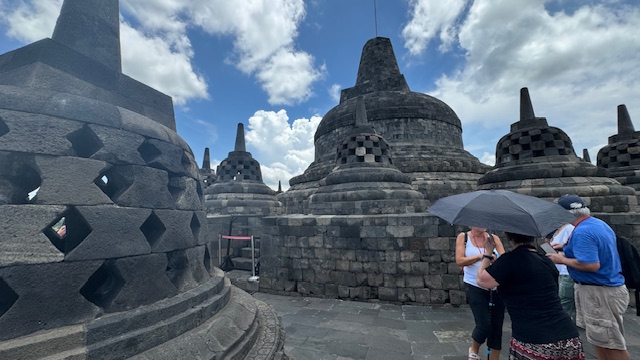


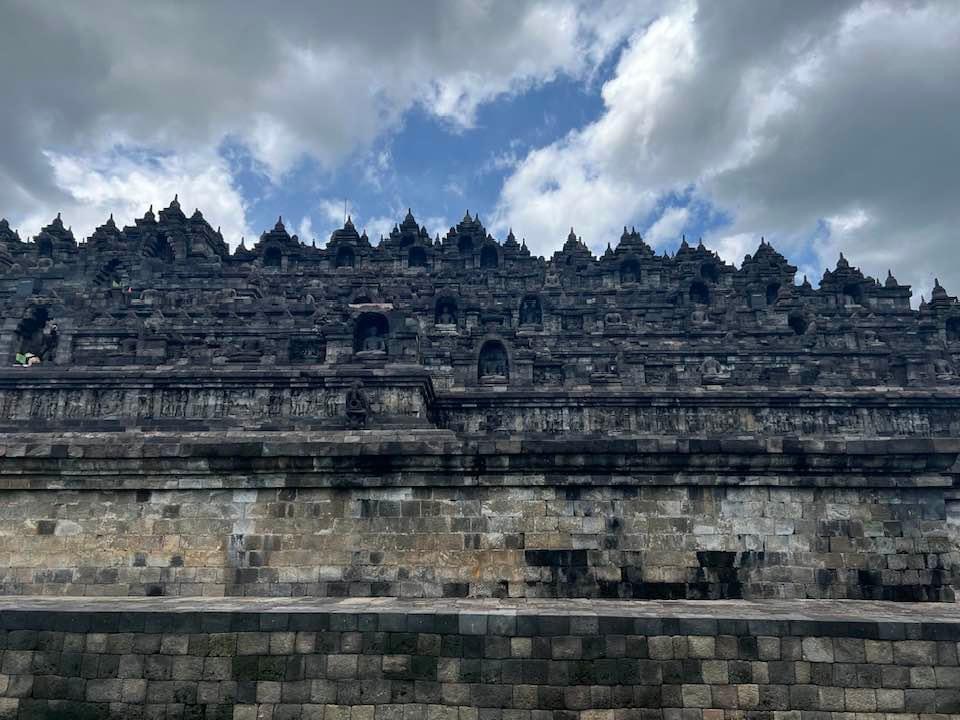
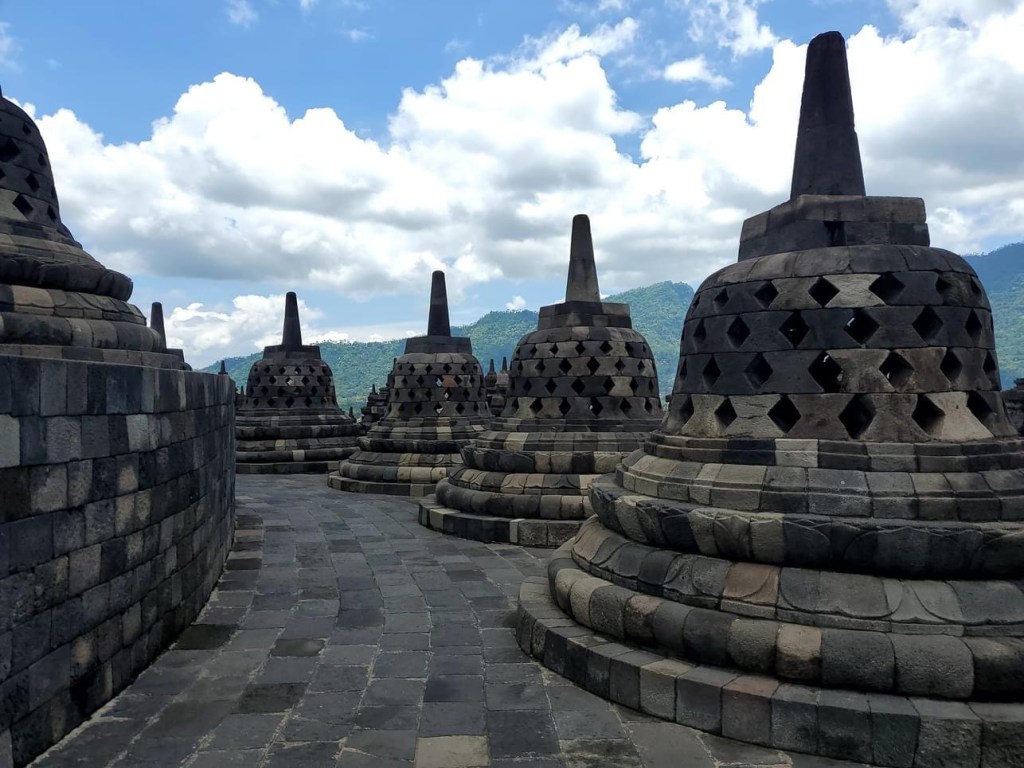
Dutch engineer Hermann Cornelius rediscovered the temple in 1814 when he and a crew of 200 men cut down trees and partially unearthed sections of the structure but felt it might be too unstable to fully excavate and abandoned the effort. Dutch residents of the area continued Corneilus’ work and in 1835 the entire structure was unearthed.
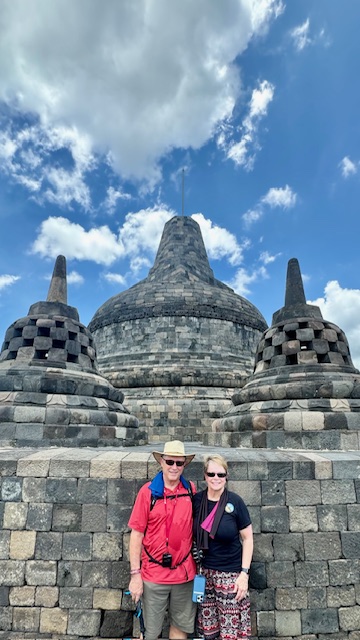

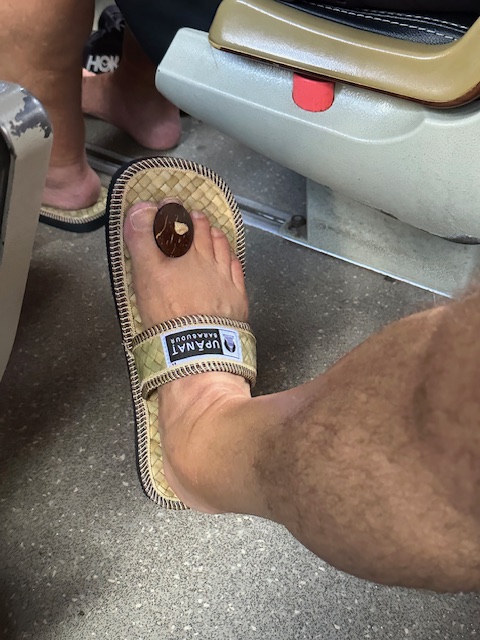
Today the Borobudur Temple is once again a major pilgrimage site for Buddhist and a major tourist attraction in Java. The big challenge for local authorities is maintaining the structural integrity of the temple. Thousands of people visit the site each day and authorities fear that the constant foot traffic will ultimately destroy the structure. In order to control deterioration only 1200 visitors per day are allowed to actually climb the temple. All visitors that climb must be in a guide led group and can only be on the structure for one hour. Additionally, all visitors must wear a special rubber soled sandal that is provided and included in the admission price.
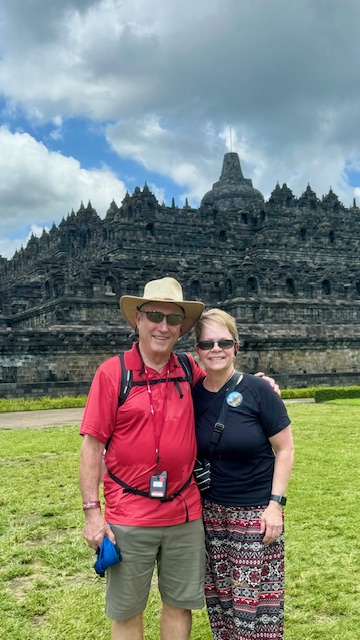
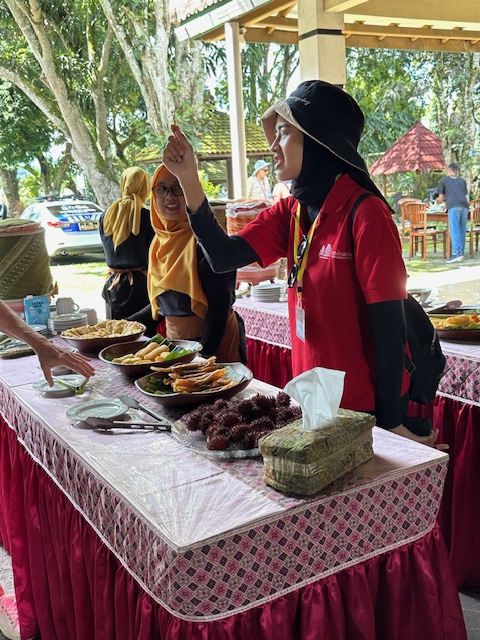
We highly recommend this tour for future travelers. Viking did an amazing job organizing and executing this tour. Approximately 200 people elected to take the tour which required seven buses to transport guest to the temple. The tour operator arranged for a police escort to get our caravan of buses to and from Borobudur in a timely manner. Boy, did it work! We looked like a presidential motor cade zooming through Java, made us all feel very special. The tour also included a delicious catered Indonesian lunch on the Temple grounds before we returned to the ship.

We will be at sea for the next two days. Our next port of call is Ho Chi Minh City (Saigon), Vietnam on Friday, 8 March.
“Travel is not reward for working, it’s education for living.” Anthony Bourdain
 Don & Kully's World Cruise on Viking Neptune
Leave a comment