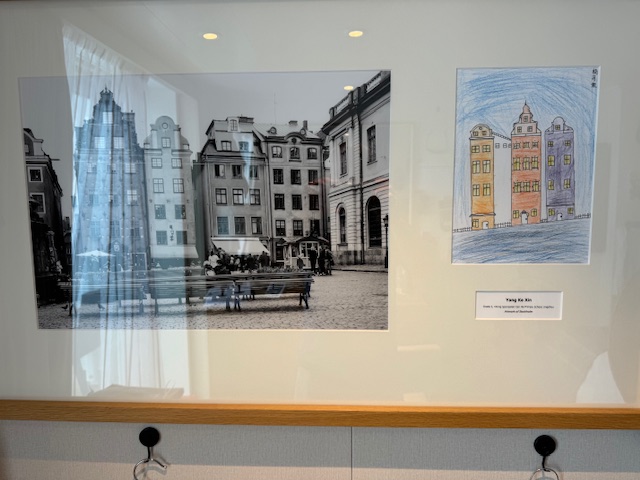
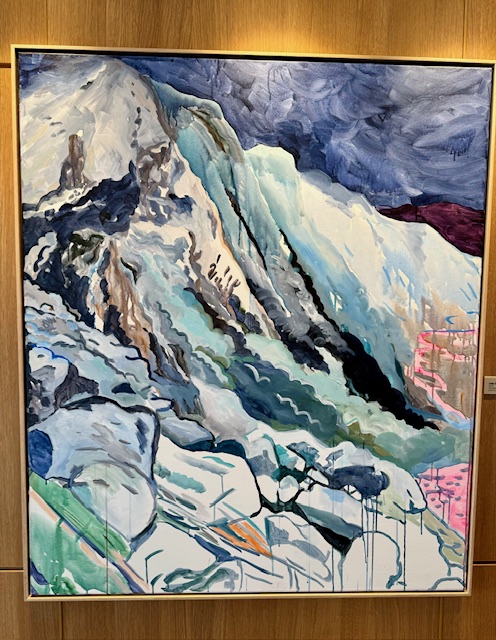
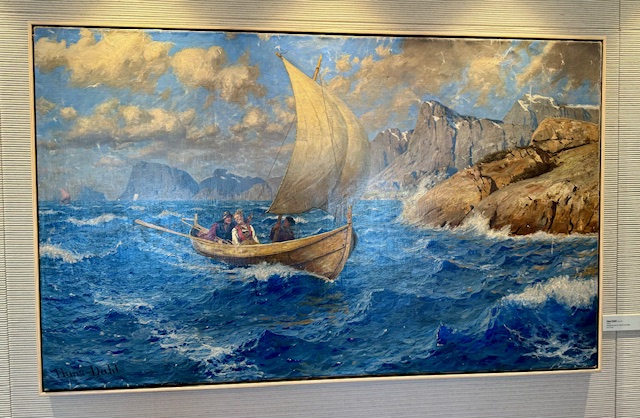
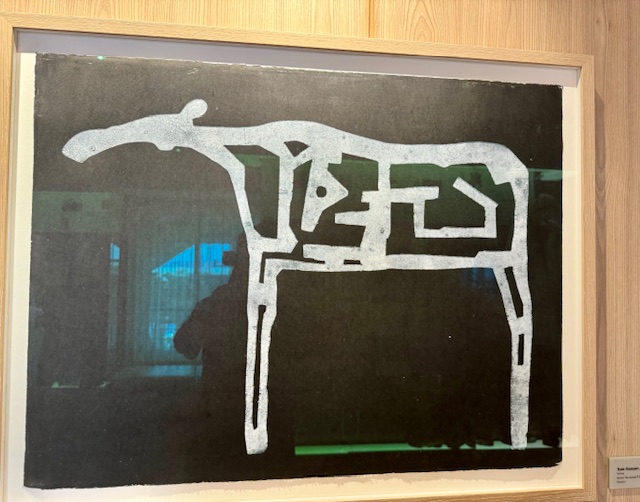
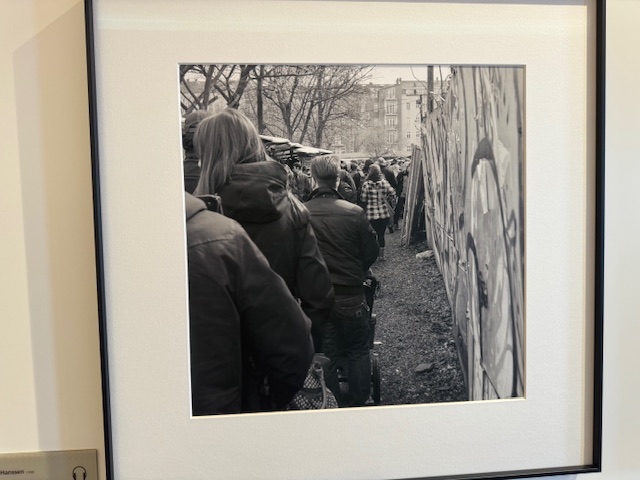
A common thread across every cruise ship and every cruise line that we have sailed is all ships have a beautiful art collection. Viking is no exception; however, Viking’s art is different than the other lines we have cruised with. Their art is there not only to delight, but to pay homage to the line’s heritage featuring established as well as up and coming artists most of whom are Norwegian. The ships art guide says; “The pieces you will see throughout the ship encompass a variety of media and approaches – from digital to print, from oil paintings to photography and sculpture – and have been handpicked for the depth with which they reflect our origins and the beauty with which they capture our magnificent nature. …We like to think these pieces celebrate the traveler as collector of ideas and experiences, a tradition that dates back to long before the Vikings.”
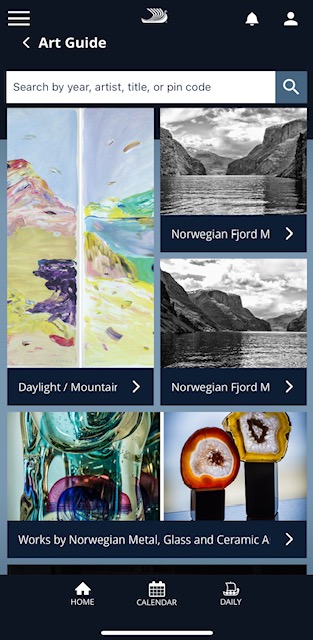
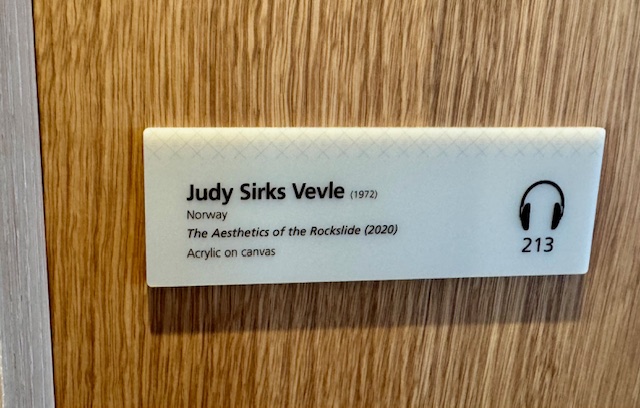
Each of the pieces of art has a small plaque next to it with the artist name, name of the piece and a pin number. The pin number can be entered into an electronic art guide that is included in the Viking App for a more detailed audio description of the item. Using this App, you can take a self-guided tour of the ship’s art collection.
All of the ship’s stairwell landings, contain a reproduction of panels from the Bayeux Tapestry which dates back to the 11th century. The tapestry documents William the Conqueror’s invasion of England and the death of Anglo-Saxon King Harold in the Battle of Hastings. This is significant to Viking’s Heritage as Viking leader and kings played pivotal roles. King Harold was a son of Earl Godwin of Wessex, appointed by Knut the Great, son of Svein Forkbeard and grandson of Harald Bluetooth– both Vikings. William the Conqueror, who led the invading army, was a descendant of the Viking chieftain Rollo. William shook England’s shoreline when he arrived with a fleet of 600 ships, many of which were built in the traditional Viking clinker style. The tapestry depicts scenes leading up to and during the battle. Following the battle the areas once dominated by the Vikings evolved into separate nations/kingdoms thus ending the Viking era. The original tapestry is approximately 20 inches tall and over 200 feet long and resides in a museum in Bayeux, Normandy, France.
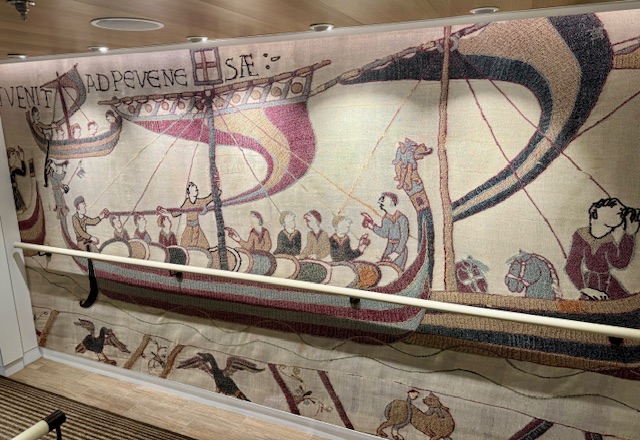
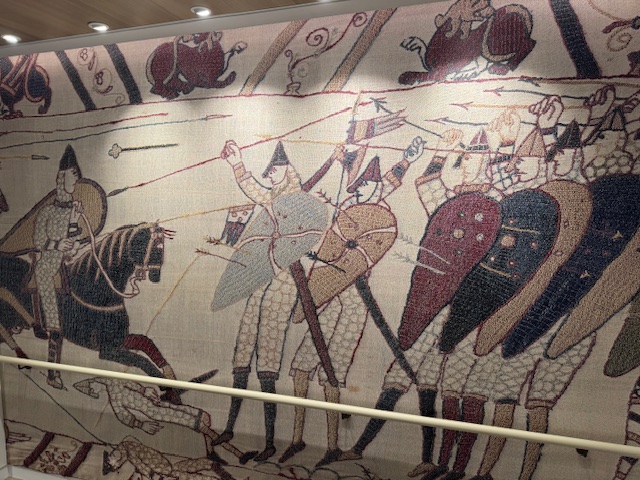
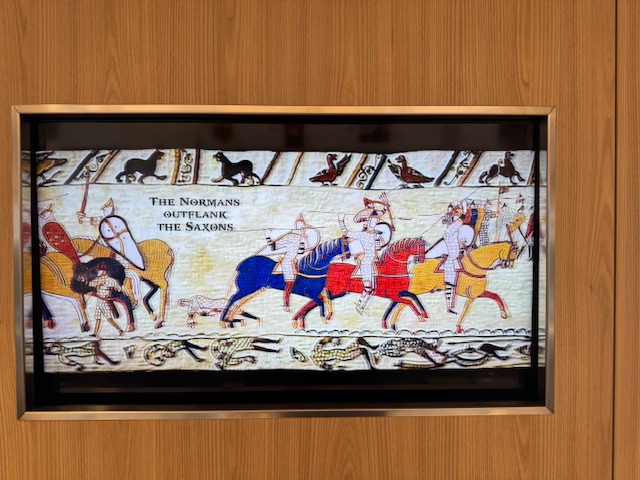
The Bayeux Tapestry is central to the theme of all Viking Cruise Ships. The colors in the tapestry serve as the color pallet for the ship’s interior decorations, Carpets, fabrics, and drapery. All of the woods used in furniture and paneling are woods from the same era.
While the Bayeux tapestry tells us about the end of the Viking era; the aft stairway niches of the ship are adorned with reproductions of Ancient Viking Runestones which provide a glimpse of the ancient Vikings. The Runestones were produced by the Studio Sem Scultori Associati SRL, recognized as one of the most important sculpture studios in Europe. For Viking Neptune Studio Sem artisans surveyed some of the thousands of etched runic stones scattered throughout Scandinavia and selected nine panels to reproduce on rough stone faces.
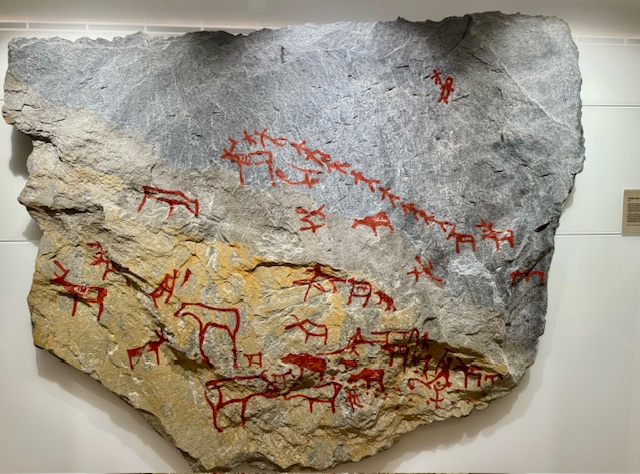
The Runestones are masterful works of passion and art and are among the treasured relics that bring us closer to understanding the early Vikings. They are the oldest existing original works of writing in Scandinavia that give us the names, information about their travels and stories about their achievements and fate of the Viking people.
The art on Viking ships is not only beautiful, but also provide insight into Norwegian heritage dating back to the earliest days of the Vikings through the up-and-coming artist of today.

 Don & Kully's World Cruise on Viking Neptune
Leave a comment