
- Arrive at the port a day or two early. This isn’t a new one, yet every time we cruise there are people who coming running onto the ship last minute, because of a delayed flight. Even worse, a piece of luggage misses the connection, and they’re sailing away without luggage. Take the extra day and splurge on a nice hotel, so you wake up fresh on embarkation day ready to have a good time.
- If you are a Water Pic or Hydro Floss user recommend that you get a portable rechargeable unit as there is only one wall socket in the bathroom that will only work with electric razors. People onboard are reporting they are unable to plug their Water Pics into that outlet.
- Super Glue. Pack a small tube of superglue! Can be used to fix everything from broken glasses to shoe heels. I’ve already had to use mine to repair the little rubber wings on one of my ear buds (those of you that use ear buds know what I’m talking about).
- Walkers. I’m sure you already know that the Prominade Deck on the Viking Ships serves as a running/walking track. Four laps around the deck make one mile. Bring a Handheld Tally Counter to keep track of your lap count.
- Hangers. The hangers provided by Viking are the very nice heavy wooden hangers that take up a lot of space. Bring ladder hangers that can accommodate four or more pairs of trousers. Also dry cleaner trouser and dress shirt hangers can be used and take much less space than the wooden hangers.
- Veterans. This is probably going to garner some negative feedback, so let me preface what I’m about to say by telling you that I am a proud 20-year Army veteran. Following my service in the Army I spent over 20 years in industry supporting various Army, Navy and Joint Services programs that involved international travel, requiring safety and security briefings prior to leaving the USA. As proud as we are of our service, and we should be, people in some the nations we will visit aren’t as impressed. So please be careful about wearing hats shirts etc. that could make you a target for bad actors in these places. I’m not saying don’t bring the hat’s etc., just give some discretion about what you wear when leaving the ship.
- Magnets are a must to help organize your cabin. See my separate post under Pro-hacks and Lessons Learned.
- Ponchos. Add disposable ponchos to your day pack. When we left on our tour in Puntarena, Costa Rico it was sunny and 80 degrees, when we arrived at our tour in the cloud forest it was 60 degrees with light rain. Fortunately, the gift shop sold ponchos. We won’t get caught short again.
- Hanging Shoe Bags. Hanging shoe bags are another great way to increase storage space in your cabin. They can be use to not only store shoes, but toiletries, sunscreen, and sunglasses to name a few things. Here’s a picture of ours:
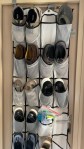
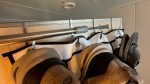
Ours is hung on the inside of the bathroom door, but it could be hung on the outside as well, or you could hang one on each side. The door is 1.5 inches thick, and the hook on this one comes down 2.75 inches allowing it to clear the closing mechanism.
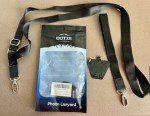
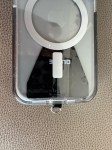
10. Phone Lanyards. The latest pick-pocket scheme is cell phone theft. One of the scams is two people riding on a motor scooter in crowded tourist areas, allowing the driver to maneuver close to the unsuspecting crowds of picture taking tourists, while the person on the back reaches out to snatch the phone out of the tourist hands. Others do the same while running through a crowd of tourists. One way to avoid this is to tether your phone with a lanyard. There are many different types and brands available on Amazon, here’s a picture of the one we use. Two things I like about this one: first, it comes with both a long and a short lanyard; second the long lanyard is adjustable so you can use it as a cross body, or around your neck, or even attached to a belt loop or backpack. The attaching device with the little ring that the lanyard attaches to, is placed in your phone case allowing the ring to protrude through opening for the charging cable.
11. Portable Battery Packs for your phone. We are finding that our phone batteries require more frequent charging than normal. I have a new iPhone 15 Pro, so not a battery issue, appears to be caused by increased camera use and photo editing. So, I’ve started caring a Portable Battery Pack and cable especially when off the ship to resolve the problem. Portable Battery Packs are available at Amazon, Walmart, Best Buy and other retailers.
12. Laundry. Viking provides laundry detergent but bring your own stain removers. (See my separate post on Laundry).
13. Mail yourself packages. When in US ports we pack souvenirs we’ve purchased and mail them home. Honolulu was our last US port, so we went to a local post office and used flat rate boxes to send home the items we purchased during the first three weeks of the trip.
14. Carry cash in French Polynesia if you are interested in buying local handicrafts and art. Most of the vendors at the various craft markets we visited only take cash. They will accept both French Polynesian Francs and US Dollars. Most retail stores do accept credit cards.
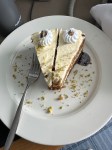
15. So far, the Neptune staff has managed to go above and beyond to meet guest desires. As an example, two nights ago Carrot Cake was on the dessert menu and one of our dinner companions ordered it. Shortly after the order was made, the Executive Pastry chef comes to our table and apologizes to us, because he had underestimated demand for the cake and had run out. He promised to make more cake and deliver it to her state room. Here’s what we found in our state room this afternoon…and we hadn’t ordered the cake, we just happened to be at the table.
16. Sea sickness. We have had a number of days during the Pacific Crossing that have been a little rough. Fortunately, neither Kully or I have had a problem, but a few guests have. If you are susceptible to motion sickness, it’s a good idea to have medication with you, but if you don’t the ships medical center has sea sickness medication available at no charge. There are also all natural motion sickness patches that you can purchase from Amazon. We had these and found they stayed in place longer than the prescription patches. Also, they work 72 hours per patch.
17. Food portions. Now that we’re nearly six weeks into the voyage, people’s eating habits seem to be slowing down and most of us are trying to eat more like we do at home. Some tricks we’ve discovered in The Restaurant (main dining room) is to order half portions of entrees, share deserts, better yet skip desert or chose fruit or berries rather than the baked deserts. Another interesting treat has been sugar-free and plant-based ice cream.
18. Special Diets. Just let Viking know if you have special dietary needs, they’ll figure it out and provide personalized daily menu options.
19. Family members at Ports of Call. If you have friends or family members at one or more of the ports we visit, you can make arrangements through guest services to bring them on board to visit. A passport is required for the guest to board, and you must register them with guest services at least four days prior to the port visit. Check with guest services once you board for details. Incidentally, Viking only allows this on the World Cruise.
20. In room mini bar. The mini bar is pre-stocked, but your room steward will be happy to tailor the selections to your liking.
21. Penguin Parade on Phillip Island. This excursion is a must see, but recommend you bring your binoculars.
22. Local currency. We were on an independent excursion in Melbourne, Australia and had an opportunity to visit a small privately owned wildlife rescue preserve, but they would only accept Australian Dollars. No problem, we stopped at a local bank and pulled out local currency. The lesson learned – make sure you carry a debit card or credit card that allows ATM withdrawals. (I’ll do a separate post later regarding local currency). We’ve also found that guides appreciate being tipped in local currency, but most will take dollars. If you were a guide in the US would you want a European tourist to provide your tip in Euros? When in doubt, ASK!
23. Do local excursions in Bali. We were in Bali for three days and discovered that local drivers/guides can be hired at the pier for $80 to $100 per day. Only licensed drivers can access the port. Just make a list of the sights you would like to see and negotiate the rate with any of the local guides waiting at the terminal. You will get a much more personal experience than if you do the massive cruise line operated tours. The name of the driver we used was Made Karta he can be reached on WhatsApp at +6281 338 232 611 or email; made_karta2005@yahoo.com
24. Spend at least one night off the ship in Ho Chi Minh City. The drive from the port into the city ranges from 45 to 90 minutes or more depending upon traffic. All tours from the port have to drive through central HCM City, meaning at least two hours of every excursion is getting to and from the city. Numerous local guides are available for very reasonable prices. We recommend – Le Xuan (pronounced Soon), he is without question one of the best guides we’ve ever had. His English is excellent, his enthusiasm is infectious, we couldn’t have asked for more. His email address is tourwithxuan@gmail.com and his “WhatsApp” contact is +84 97 9479516. We also strongly recommend the Silverland Yen Hotel. Small, clean and centrally located. The staff is very kind and their hospitality is wonderful. Here’s a link to their website: Silverland Yen Hotel — Silverland Hotels & Spas
25. Amazon Lockers. We boarded in Fort Lauderdale and discovered there were a few items we needed that were available from Amazon. We ordered the items and had them shipped to an Amazon Locker near the Los Angeles Cruise Terminal. Worked like a charm.
26. Specialty Restaurant Reservations. You will have the opportunity to make reservations prior to boarding the ship. We recommend that you make one or two for the first couple of weeks but wait until you’re onboard to do the rest. We have had no problem getting reservations, we’ve even been able to walk in without reservations on a few occasions.
27. Visit a City App. This App is a powerful tool for planning a visit to just about any city in the world. Simply type in the city you are visiting to find things to do, hotels, and sights to see. The app can also build plans from 1 to 6 days that you can tailor to your needs. It can also map out your planned tour on Apple Maps, Google Maps or Waze.
28. Singapore Mass Rapid Transit System or MRT. The MRT is an excellent way to get around Singapore. The system is efficient, reliable, clean and very easy to use. MRT offers a one-, two- or three-day Tourist Pass that gives users unlimited travel on the city’s bus and subway system. The tickets have to be bought at a ticket office located in the larger stations and must be paid for in cash. Check on their website at http://www.smrt.com.sg
29. Local currency exchange. I mentioned above that we recommend using bank ATMs to obtain local currency, but what do you do with unspent currency? We had several dollars’ worth of New Zealand and Singapore currency that I was going to exchange for US currency and the agent at the money exchange suggested I change it to the currency for the next major port we would be visiting. Da, what a great idea!
30. Shopping in Singapore. This was a great stop for resupplying any essential items e.g. toiletries and personal hygiene products. The pharmacies had most (not all) of the over-the-counter items we needed.
31. When booking excursions, read the descriptions carefully and be honest with yourself about your physical abilities. If a tour says it’s difficult…it is! Don’t expect the same kind of accommodations for physical limitations as we are used to having in America. Also, be mindful of the time frame that you are scheduled to be in port. If it’s a short port day, or it’s a long drive to the excursion destination the excursions are going to be shorter and not as in depth as you might expect. For example, when we in Honfleur, France an optional tour called Paris on your own was offered. We were in port for roughly 12 hours, Paris is a three hour drive from the port. The back on board time is always one hour prior to scheduled departure and most tours start leaving 30 minutes to an hour after arrival. So, that leaves 10 hours for a tour of Paris that involves a total of 6 hours on a bus, leaving only 3 or 4 hours at the destination. Also, when a tour says “on your own” that’s exactly what it means. You are expected (rightfully so) to do your own research and to plan your day.
32. Tipping — There are different tipping practices all over the world. Don’t assume you will just do like you do in America. Most American’s are very generous tippers, so we have a tendency to over tip in other countries. Many of the countries we visited had service fees built into restaurant bills, so there was no need to add an additional tip unless you felt the service was very exceptional. Also, if using a credit card most restaurants bring a handheld credit card device to your table and run the full amount when you give them the card, no opportunity to sign the check and add a tip after the fact. You have to tell them before they run the card you want to add a gratuity. Best advice is to do a google search for tipping practices for the individual country you are visiting to determine the right answer regarding tips. Viking only provides tipping recommendations for tour guides and drivers.
33. Good comfortable and supportive walking shoes are an absolute must. There are many good brands of athletic shoes that have a waterproof option, these are very handy if there is rain in the forecast. Many of the tours involve walking on cobblestone, uneven surfaces, and climbing stairs and can be long distances. Light weight walking sticks may be helpful as well. Again, read tour descriptions carefully.
34. Light travel umbrellas may be helpful. Viking does provide large umbrellas that work very well, but they are large and heavy.
35. There is a lot of talk on Cruise Critic and Face Book about pre-booking excursions. Our advice is to pick what you think are must see excursions and book them first. More popular tours do sell out, but not all sell out. If tours are sold out, you can ask guest services to place you on a stand-by list. We did this several times and, in most cases, got on the tour. Also, check Viator and Trip Advisor for private tour options. Often the same tours are offered at a lower price and with a much smaller group.
36. The Restaurant, Manfredi’s and Chef’s Table all have large tables or private rooms with large tables that can accommodate groups up to 12 people. This was a great option for celebrating special occasions. Just check with the hostess at the venue you want to use for reservations. Upon request, guest services will prepare and send invitations to attendees.
37. We stayed in London for three nights after the cruise. We booked an apartment in Central London through Airbnb. Because of this, we elected to send our two largest bags home using luggage forwarding. Happy we did, but it was very expensive.
37. Viking shuttles from the ship to London Heathrow were scheduled as much as five hours prior to scheduled flight departures. So, some passengers left the ship as early as 3:00 AM. May want to avoid early morning flights or if you must schedule an early morning flight you may want to consider leaving the ship the night before and staying at a hotel near the airport. There is a Hilton Garden Inn at Heathrow.
38. Heathrow security enforces the one-quart size bag of liquids and gels in your carry-on bags.
We’ve now been off the ship for one week and have had an opportunity to reflect about our experiences on Viking Neptune. The first and most important conclusion is we are so incredibly blessed to have the time and resources to take such an amazing journey. So many times, we fail to see the forest through the trees and fail to appreciate the wonders around us. Here are a few more final recommendations/thoughts that we hope are helpful for future world cruisers.
- Be flexible – as we learned, there are so many things that can happen on a cruise of this duration that will force you to change your plans. Port calls can be cancelled or extended because of weather, world events can cause itinerary changes, tour operators can cancel tours etc. etc. Always have a back-up plan. If you can’t get that dream excursion, is there a private tour operator that might offer something similar.
- Take the time before you leave to learn a little bit about the regions you’ll be visiting. Do a Google search on New Zealand, Australia, Vietnam etc. Have a rudimentary understanding of the geography, culture and history of the places you’re going to visit. No need to read volumes, just a few online articles will give you a basic understanding.
- Don’t over pack. I’ve written about it in this blog, and many others have as well, enough said.
- Participate in the onboard enrichment programs. The onboard lectures are one of the things that make Viking Ocean Cruises special. We felt like we got a semester abroad while on the cruise. The historical and cultural lectures about the areas visited were very helpful in gaining a better understanding about the places we visited. The other “wow” moment for me was having concurrent lectures from the different academic disciplines for the areas we were visiting. For example, when going through central America we had a lecturer who talked about history, an anthropologist who talked about native cultures, a naturalist who talked about indigenous plants and wildlife and an archeologist who talked about ancient structures. There was a similar mix of experts for the other regions visited. Having the lectures from these different disciplines concurrently helped us gain a more holistic understanding of the places we visited.
- Make an effort to meet new people. Seek out fellow cruisers who are from different parts of the country and different parts of the world you’ll be amazed by their insights and different perspectives.
- Read our post on “Don’t be the Ugly American” it can be found under the lessons learned category.
We’ve tried to provide some key lessons learned and recommendations for future world cruisers and hopefully you will find them useful in planning your big adventure. The planning is a lot of work, but don’t get so wrapped up in the planning that you don’t take time to enjoy and appreciate the overall experience. Take time to relax and smell the Roses … and the salt spray.
Please feel free to add your thoughts or ask questions in the comment section. We don’t claim to have all the answers and would love to hear what others have to say, and to see the lessons you learned.


 Don & Kully's World Cruise on Viking Neptune
Leave a reply to David Stout Cancel reply